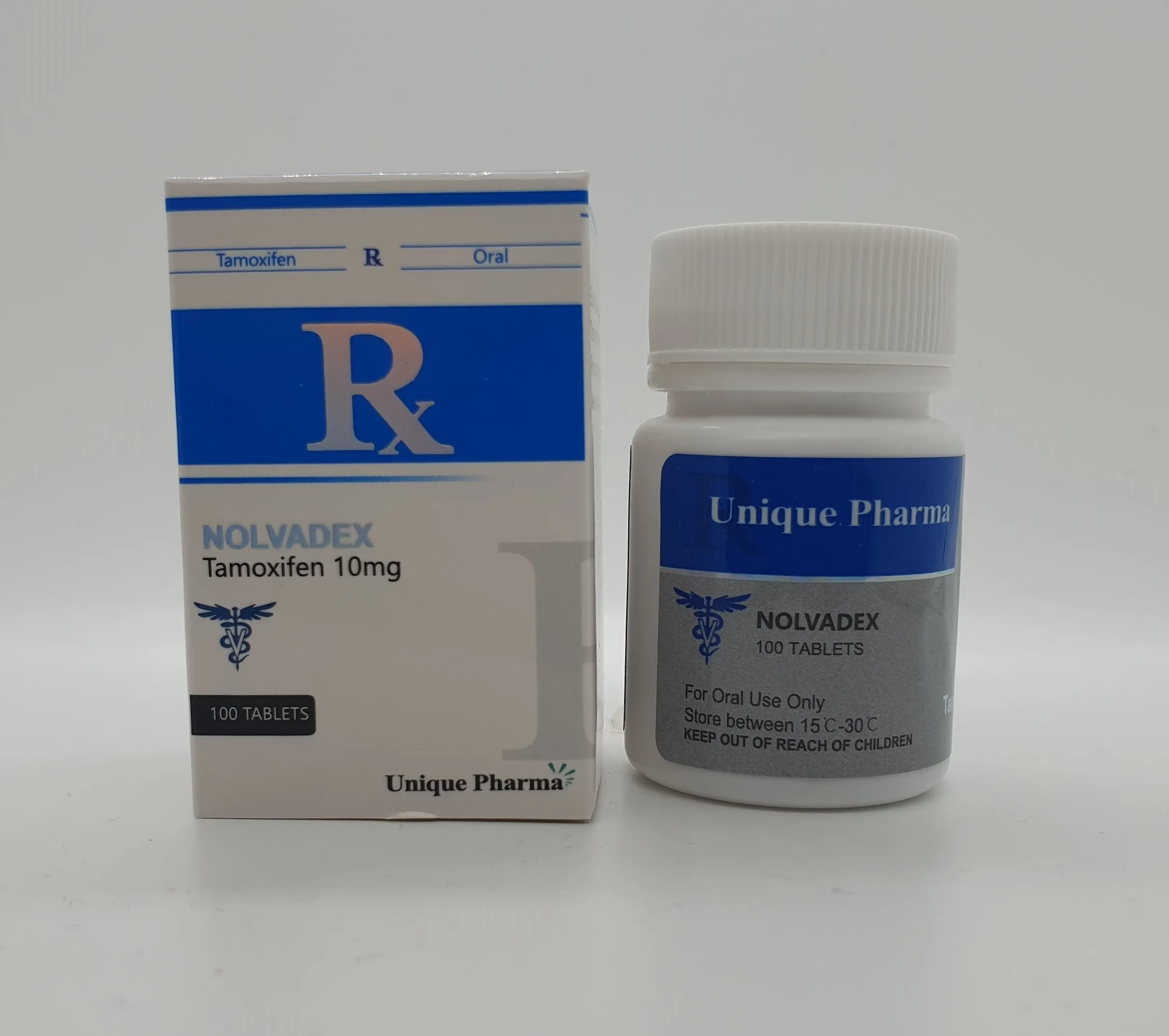
Chemical Profile
- Generic name: Tamoxifen (commonly marketed as Nolvadex)
- Chemical class: Selective Estrogen Receptor Modulator (SERM)
- Molecular formula: C26H29NO
- Molecular weight: approximately 371.51 g·mol−1
- Physical form: oral solid dosage (tablets)
- Terminal elimination half-life: approximately 5-7 days
Clinical Pharmacology
Nolvadex (Tamoxifen) is a selective estrogen receptor modulator that competitively binds to estrogen receptors. In breast tissue, it acts as an estrogen antagonist, blocking the effects of estrogen. This makes it valuable for preventing gynecomastia during anabolic steroid cycles and for post-cycle therapy to restore natural testosterone production.
Applications
- Post-cycle therapy (PCT) to restore natural hormone production
- Prevention of gynecomastia during steroid cycles
- Estrogen control without complete suppression
- Stimulation of gonadotropin release
Dosage Guidelines
Typical dosing ranges from 10-40mg daily depending on application. For PCT, common protocols involve 40mg daily for 2 weeks followed by 20mg daily for 2 weeks. Always consult with a healthcare professional before use.
1. Description — Clinical summary
Nolvadex is a brand name for tamoxifen citrate, a selective estrogen receptor modulator (SERM) widely used in oncology and some off‑label indications. Clinically, tamoxifen is primarily indicated for:
- Treatment of estrogen receptor (ER)–positive breast cancer (adjuvant and metastatic) in pre‑ and postmenopausal patients.
- Risk reduction of invasive breast cancer in women at high risk.
It is also used off‑label for male breast cancer, certain fertility/ovulation‑induction protocols, and to treat or prevent gynaecomastia. Tamoxifen is administered orally as a tablet.
Key clinical points:
- Effective for ER+ tumors and in breast‑cancer chemoprevention.
- Requires long‑term use in many indications (commonly 5 years, sometimes extended to 10).
- Contraindicated in pregnancy and lactation.
2. How does nolvadex work? — Mechanism of action
Tamoxifen is a selective estrogen receptor modulator (SERM). Its actions are tissue selective:
- Antagonist activity at estrogen receptors in breast tissue — blocks estrogen binding and downstream gene transcription that promote proliferation of ER+ breast cancer cells.
- Partial agonist activity at estrogen receptors in bone and the endometrium — can preserve bone density (especially in postmenopausal women) and stimulate endometrial tissue (raising endometrial hyperplasia/cancer risk).
Pharmacokinetics and metabolism:
- Orally active. Tamoxifen is a prodrug extensively metabolized in the liver by cytochrome P450 enzymes (notably CYP2D6 and CYP3A4) to active metabolites (4‑hydroxytamoxifen and endoxifen) that have greater affinity for the estrogen receptor.
- Long apparent half‑life due to active metabolites and tissue accumulation; steady state and washout are gradual.
Clinical importance:
- Drugs that strongly inhibit CYP2D6 (for example, paroxetine, fluoxetine, bupropion) can reduce formation of active metabolites and may reduce tamoxifen efficacy. Assess co‑medication choices in patients on tamoxifen.
3. Dosage — Medical and usage guidelines
Doses below are typical but must be individualized by the treating clinician based on indication, comorbidities, concomitant medications, and patient factors.
General adult dosing (typical):
- Adjuvant therapy for ER+ breast cancer: 20 mg orally once daily. Duration historically 5 years; many patients now receive 5–10 years depending on risk factors and guidelines.
- Metastatic breast cancer: commonly 20 mg once daily; some patients may receive 40 mg/day (divided or single dose) depending on response and tolerance.
- Chemoprevention (high‑risk women): 20 mg once daily for 5 years to reduce risk of invasive breast cancer.
- Male breast cancer: similar to female dosing, commonly 20 mg once daily.
- Gynaecomastia/gynecomastia (off‑label): 10–20 mg once or twice daily for several weeks to months depending on response.
- Ovulation induction (off‑label): regimens vary; common example is 10–20 mg once daily for 5 days starting on day 3–7 of the menstrual cycle. Clomiphene is more commonly used; tamoxifen may be used when clomiphene is unsuitable.
Pediatric use:
- Limited data. Use only in specialist settings and according to pediatric oncology guidance.
Missed dose:
- If a dose is missed, take it as soon as remembered on the same day; do not double the next dose.
Dose adjustments:
- No standard renal dose adjustment (minimal renal excretion of parent drug). Caution in hepatic impairment — tamoxifen is hepatically metabolized; severe hepatic impairment may require specialist management and monitoring.
Monitoring and treatment duration:
- Baseline and periodic clinical breast exams and annual mammography as per oncology guidelines.
- For adjuvant therapy, reassess duration (5 vs 10 years) based on risk, tolerance, menopausal status and guideline recommendations.
Drug interactions to consider:
- Strong CYP2D6 inhibitors (e.g., paroxetine, fluoxetine, bupropion) can reduce formation of active metabolites and potentially reduce efficacy.
- Co‑administration with anticoagulants (warfarin) may increase INR — monitor closely.
- Estrogen therapy may antagonize tamoxifen’s effects.
Always follow institutional oncology protocols and specialist guidance.
4. Side effects — Common and rare adverse effects
Common (incidence varies by population):
- Hot flashes, sweating.
- Menstrual irregularities, amenorrhea or altered menses.
- Vaginal discharge, vaginal dryness; sexual dysfunction.
- Nausea, gastrointestinal upset.
- Weight changes, fluid retention.
- Mood changes, depression, headache.
Less common but clinically important / potentially serious:
- Venous thromboembolism (deep vein thrombosis, pulmonary embolism) — increased risk versus nonusers; risk factors (age, smoking, prior VTE, immobilization) should be evaluated.
- Stroke — small increased risk observed in some studies.
- Endometrial pathology — endometrial hyperplasia, polyps, and increased risk of endometrial carcinoma and, rarely, uterine sarcoma because of partial uterotrophic agonist activity. Any abnormal uterine bleeding should prompt evaluation.
- Ocular toxicity — rare reports of retinopathy, decreased visual acuity, and cataract formation; ophthalmic symptoms should prompt evaluation.
- Hepatotoxicity — elevated hepatic enzymes; rare reports of severe liver injury, hepatic steatosis, and rare hepatocellular carcinoma.
- Hypertriglyceridemia — can precipitate pancreatitis in rare cases; monitor lipids when clinically indicated.
- Thrombocytopenia and other hematologic abnormalities — rare.
Contraindications and special cautions:
- Pregnancy — tamoxifen is teratogenic and contraindicated. Effective contraception required during treatment and for an interval after stopping (follow specialist advice).
- Lactation — excreted in breast milk; breastfeeding contraindicated.
- Active or history of venous thromboembolism — risks vs benefits must be carefully considered.
- Hypersensitivity to tamoxifen or excipients.
Patient counseling points:
- Report sudden calf pain/swelling, chest pain, shortness of breath, or neurologic symptoms (possible thromboembolism or stroke).
- Report any abnormal vaginal bleeding or discharge.
- Inform clinician about all medications, especially antidepressants (SSRIs) and supplements.
- Use reliable contraception and avoid pregnancy while taking tamoxifen.
5. Storage — How to store it
- Store tamoxifen tablets at controlled room temperature: typically 20–25 °C (68–77 °F). Allowable excursions are often 15–30 °C (59–86 °F) depending on local product labeling.
- Keep in original container to protect from moisture and light unless the product labeling indicates otherwise.
- Protect from excessive heat and humidity (do not store in bathroom).
- Keep out of reach of children and pets.
- Dispose of unused medication per local regulations (do not flush); consult a pharmacist or take‑back program for safe disposal.
Final notes
- This guide provides an overview; management must be individualized. Prescribing, dose adjustments, monitoring and duration should be determined by an oncology specialist or qualified prescriber. If you or a patient have specific clinical circumstances, consult oncology, obstetrics/gynecology, or pharmacy for tailored advice.
1. Description: Clinical summary
Nolvadex (brand name) contains tamoxifen citrate, a selective estrogen receptor modulator (SERM). It is primarily used in the management and prevention of estrogen receptor (ER)-positive breast cancer in pre- and postmenopausal patients. Major approved indications include adjuvant therapy for early-stage ER+ breast cancer, treatment of metastatic ER+ breast cancer, reduction of breast-cancer incidence in high‑risk women, and treatment following ductal carcinoma in situ (DCIS) in selected patients. Tamoxifen is also used off‑label in several settings (e.g., male breast cancer, treatment of gynecomastia, and certain fertility protocols), but these uses should be guided by a clinician.
Pharmacokinetics in brief: tamoxifen is orally active, extensively metabolized in the liver (CYP enzymes, notably CYP2D6 and CYP3A4) to active metabolites such as endoxifen. It has a long terminal half‑life (days), and steady state and washout can take weeks.
2. How does nolvadex work? Mechanism of action
Tamoxifen is a selective estrogen receptor modulator (SERM). It competitively binds to estrogen receptors (ER) and produces tissue-selective effects:
- In breast tissue: acts primarily as an estrogen antagonist, blocking estrogen-stimulated growth of ER-positive breast cancer cells.
- In bone and lipid metabolism: exhibits partial agonist activity, which can help preserve bone density and favorably affect lipid profiles in postmenopausal women.
- In the endometrium and uterus: has partial agonist activity that can cause endometrial proliferation, which is associated with an increased risk of endometrial hyperplasia and malignancy with long-term use.
The antitumor effect depends both on parent drug and active metabolites (e.g., endoxifen) generated by hepatic CYP450 enzymes (notably CYP2D6). Variability in CYP2D6 activity (drug interactions or genetic polymorphisms) can alter clinical effectiveness.
3. Dosage: Medical and varying usage guidelines
Always follow a prescribing clinician’s instructions. The following are commonly used dosing regimens (adult):
-
Adjuvant therapy for early-stage ER+ breast cancer:
- Typical: 20 mg orally once daily.
- Duration: traditionally 5 years; some patients benefit from extended therapy up to 10 years based on risk assessment and tolerability.
-
DCIS after lumpectomy ± radiation:
- Typical: 20 mg once daily for 5 years for selected patients to reduce recurrence and contralateral breast cancer risk.
-
Metastatic ER+ breast cancer:
- Typical: 20–40 mg daily (often 20 mg/day initially; some patients escalate to 40 mg/day if clinically indicated).
-
Risk reduction in high‑risk (e.g., Gail model) women:
- Typical: 20 mg once daily for 5 years.
-
Male breast cancer:
- Typical: 20 mg once daily; doses up to 40 mg/day sometimes used in metastatic disease, under specialist guidance.
-
Off‑label uses (examples—require specialist oversight):
- Gynecomastia: 10–20 mg daily for several weeks (varies by indication).
- Ovulation induction/infertility: some protocols have used 20–40 mg daily for 5 days; clomiphene is more commonly used now.
Special populations and dosing considerations:
- Renal impairment: no routine dose adjustment is usually required, but monitor clinically as metabolites may accumulate in severe impairment.
- Hepatic impairment: caution—tamoxifen is extensively metabolized hepatically; severe liver disease may require dose modification or avoidance.
- Pediatrics: not routinely used in children except under specialized care.
Monitoring and follow-up:
- Baseline assessment: menopausal/reproductive status, full medical history (personal/family history of thromboembolism, stroke), liver function tests, pregnancy test in women of childbearing potential, and baseline gynecologic exam if appropriate.
- Ongoing: periodic clinical exam, liver function tests as clinically indicated, surveillance mammography as per oncology guidelines, monitor for signs/symptoms of venous thromboembolism, new vaginal bleeding, or visual changes.
- Drug interactions: review concomitant medications (notably strong CYP2D6 inhibitors).
Do not stop abruptly without consulting the prescriber.
4. Side effects: Common and rare adverse effects
Common (incidence varies by population):
- Vasomotor symptoms: hot flashes, night sweats.
- Gastrointestinal: nausea, mild GI upset.
- Gynecologic: vaginal discharge, irregular vaginal bleeding, menstrual irregularities.
- Sexual dysfunction, decreased libido.
- Weight changes, fluid retention.
- Mood changes, fatigue.
- Musculoskeletal complaints: arthralgia, myalgia.
Less common but important / potentially serious:
- Venous thromboembolism (VTE): increased risk of deep vein thrombosis (DVT) and pulmonary embolism (PE). Risk is higher in patients with prior history or other risk factors (immobility, surgery, smoking, obesity, inherited thrombophilia).
- Stroke: small increased risk reported.
- Endometrial pathology: increased risk of endometrial hyperplasia, polyps, and endometrial carcinoma; reports of uterine sarcoma are rare but documented.
- Ocular effects: cataracts and other visual disturbances; new or worsening visual symptoms should prompt ophthalmologic evaluation.
- Hepatic dysfunction: rare severe hepatic injury; monitor liver enzymes if clinically indicated.
- Hematologic: rare cases of thrombocytopenia, neutropenia, leukopenia.
- Other: alopecia (rare), skin rash.
Drug interactions that may reduce efficacy or increase toxicity:
- Strong CYP2D6 inhibitors (e.g., paroxetine, fluoxetine, bupropion) can reduce conversion to active metabolites (notably endoxifen) and may reduce tamoxifen effectiveness—avoid or use alternatives (e.g., sertraline) if antidepressant therapy is required; discuss with prescriber.
- Anticoagulants (e.g., warfarin): tamoxifen can potentiate anticoagulant effect—monitor INR closely.
- CYP3A4 inducers (e.g., rifampin, carbamazepine) may reduce tamoxifen levels.
- Estrogen-containing therapies may antagonize effects; pregnancy is contraindicated.
Contraindications and precautions:
- Pregnancy: contraindicated—tamoxifen is teratogenic. Women of childbearing potential should have a negative pregnancy test before starting and use effective contraception during therapy. Discuss timing of conception with the oncology team (often recommended to wait several weeks to months after stopping therapy; specific timing should be confirmed with the treating physician).
- Breastfeeding: contraindicated—tamoxifen is excreted in breast milk and can harm the infant.
- Active or history of thromboembolic disease: weigh risks vs benefits; often considered a relative contraindication.
- Known hypersensitivity to tamoxifen or formulation excipients.
If the patient experiences sudden chest pain, sudden shortness of breath, unilateral leg swelling/pain, sudden severe headache, sudden visual disturbances, or heavy vaginal bleeding, they should seek urgent medical attention.
5. Storage: HOW to store it
- Store tamoxifen tablets at controlled room temperature: keep generally between 20–25°C (68–77°F). Short excursions are usually permitted (e.g., 15–30°C / 59–86°F) depending on regional labeling.
- Keep in the original container to protect from moisture and light unless otherwise instructed.
- Keep out of reach of children and pets.
- Do not use beyond the expiration date on the label.
- Dispose of unused medication according to local regulations or pharmacy take‑back programs; do not flush unless instructed.
General patient counseling points (brief):
- Take exactly as prescribed, at the same time each day; with or without food.
- Do not become pregnant while taking tamoxifen; use reliable contraception and discuss family‑planning with your clinician.
- Report any signs of clot (leg swelling, chest pain, breathlessness), abnormal vaginal bleeding, significant vision changes, or signs of liver dysfunction.
- Inform all healthcare providers (including dentists) and pharmacists that you are taking tamoxifen, especially before starting new medications (including over‑the‑counter and herbal products).
- Follow scheduled follow-up and monitoring tests recommended by your treating clinician.
This document is an educational summary and does not replace individualized medical advice. For personal management, dosing changes, or questions about interactions and monitoring, consult the prescribing clinician or pharmacist.