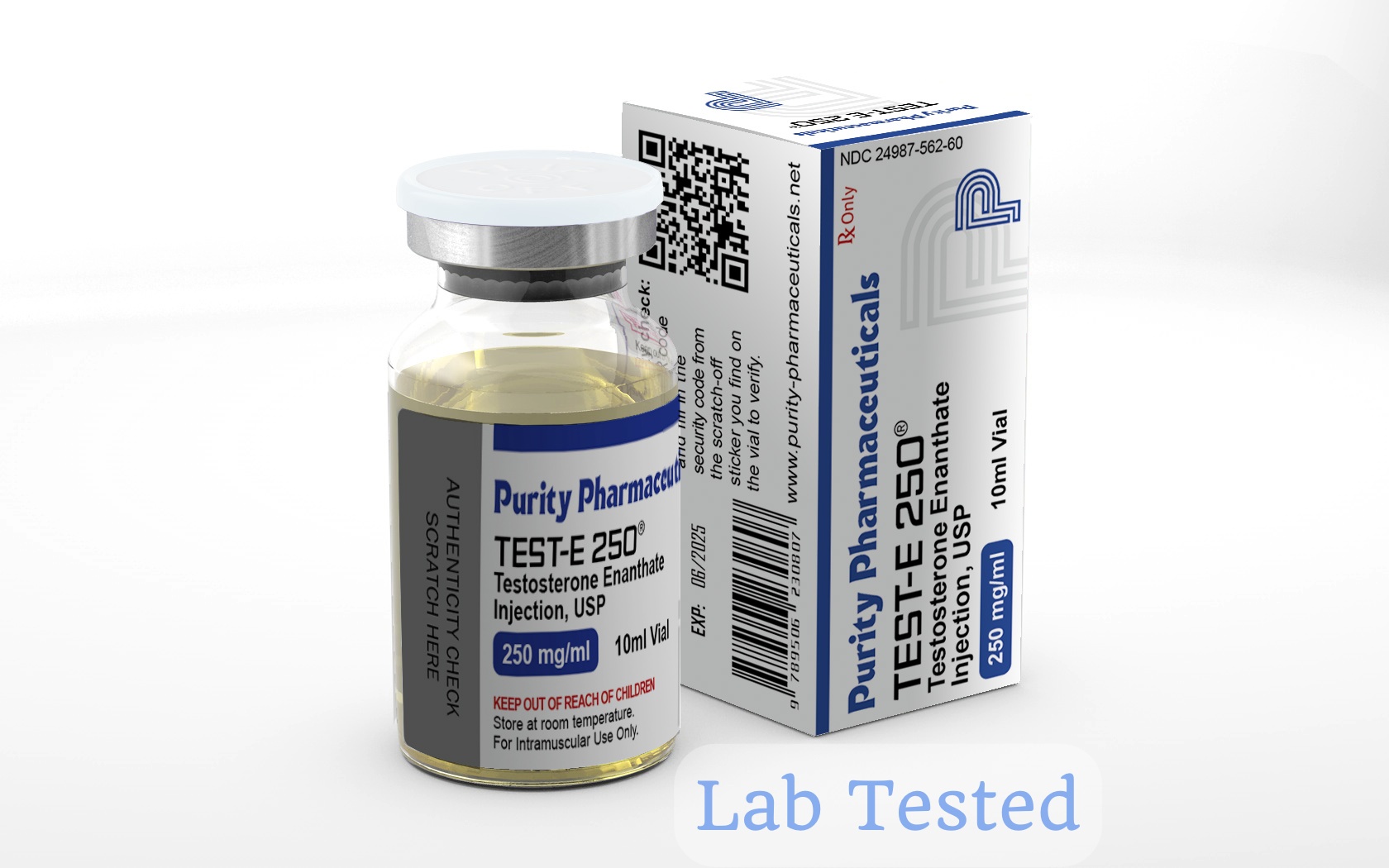
Chemical Profile
- Generic name: Testosterone enanthate (testosterone 17β-enanthate; heptanoate ester of testosterone)
- Chemical name (IUPAC): (8R,9S,10R,13S,14S,17S)-10,13-dimethyl-3-oxo-1,2,6,7,8,9,11,12,14,15,16,17‑dodecahydrocyclopentaaphenanthren-17-yl heptanoate
- Molecular formula: C26H40O3
- Molecular weight: 400.59 g·mol−1
- CAS registry number: 315-37-7
- Structural description: Testosterone enanthate is a steroidal molecule built on the cyclopentaaphenanthrene nucleus characteristic of androgens (four fused rings, labeled A–D). The parent testosterone structure contains a 3‑ketone and a Δ4 double bond (between C4 and C5). At the 17β position the C17 hydroxyl of testosterone is esterified with a heptanoic (enanthic/heptanoate) acid moiety. The steroid nucleus retains the 17β stereochemistry; the enanthate ester increases lipophilicity relative to free testosterone, favoring depot formation after intramuscular oil-based administration.
- Physical/solubility characteristics: Practically insoluble in water; soluble in common injection oils (e.g., sesame oil, cottonseed oil), and miscible to some extent with ethanol or benzyl benzoate co-solvents used in parenteral formulations.
- Typical pharmacokinetic half-life (IM depot): Apparent elimination half-life following intramuscular administration is approximately 4–5 days (reported mean ~4.5 days), with a depot-release profile that produces sustained plasma testosterone elevations over 1–3 weeks depending on dose and formulation. Terminal elimination parameters vary by assay and dosing interval.
Clinical Pharmacology
Mechanism of action (biochemical and molecular pharmacology):
- Prodrug activation: Testosterone enanthate is an inactive (esterified) prodrug that, after intramuscular depot administration, undergoes slow release from the oil phase into interstitial fluid and rapid enzymatic hydrolysis by tissue and plasma esterases to yield free testosterone and heptanoic (enanthic) acid. The liberated testosterone is the pharmacologically active moiety.
- Androgen receptor binding and genomic effects: Free testosterone diffuses into target cells and binds the intracellular androgen receptor (AR), a ligand-activated nuclear transcription factor. Upon binding, the AR undergoes conformational change, dissociates from heat-shock proteins, dimerizes, and translocates to the nucleus where it binds androgen response elements (AREs) in promoter regions of androgen-responsive genes. This modifies transcription, leading to increased mRNA and protein synthesis for target genes that mediate androgenic and anabolic effects (e.g., muscle protein synthesis, hair follicle modulation, sebaceous gland activity).
- Local enzymatic conversion: In androgen-responsive tissues, testosterone may be converted by 5α‑reductase to 5α‑dihydrotestosterone (DHT), a higher-affinity AR ligand with pronounced effects in tissues such as prostate, skin, and hair follicles. Testosterone also serves as a substrate for aromatase (CYP19), producing estradiol in adipose tissue and other sites; estradiol mediates a subset of testosterone’s effects on bone metabolism, libido, and feedback regulation of the hypothalamic–pituitary–gonadal (HPG) axis.
- Endocrine feedback: Circulating testosterone (and its aromatized metabolites) exerts negative feedback at the hypothalamus and pituitary, reducing secretion of gonadotropin‑releasing hormone (GnRH), luteinizing hormone (LH), and follicle-stimulating hormone (FSH). Chronic exogenous androgen administration therefore suppresses endogenous testicular testosterone production and can reduce intratesticular testosterone levels and spermatogenesis.
- Physiologic effects (selected): Androgen receptor–mediated increases in protein synthesis and nitrogen retention (anabolic effects), stimulation of erythropoiesis via increased erythropoietin production and reduced hepcidin, effects on bone mineral density through direct AR and indirect aromatization to estradiol, and promotion/maintenance of male secondary sexual characteristics. Androgens also influence lipid metabolism, coagulation factors, and hepatic protein synthesis (e.g., effects on SHBG).
- Metabolism and elimination: After hydrolysis to testosterone, hepatic biotransformation occurs via reduction, hydroxylation, and conjugation (glucuronidation and sulfation) of metabolites. Excretion is primarily renal as conjugated metabolites; a fraction is eliminated in bile. The enanthate moiety is liberated as heptanoic acid and metabolized via normal fatty acid pathways.
Pharmacokinetic considerations relevant to mechanism:
- Depot formation and lipophilicity: The C17 enanthate ester increases lipophilicity, slowing systemic availability and prolonging duration of action relative to unesterified testosterone. Release kinetics are governed by formulation (vehicle, concentration), injection site, and local blood flow.
- Time to peak and duration: Following IM injection, peak serum testosterone typically occurs within 24–72 hours; concentrations decline over subsequent days to weeks. Clinical and biochemical effects reflect both peak and trough concentrations, and dosing intervals are selected to maintain target therapeutic ranges while minimizing fluctuation.
Storage & Stability
- Formulation and container: Testosterone enanthate is commonly supplied as an oil-based solution for intramuscular injection, packaged in single-dose or multiple-dose sterile vials and ampoules. Multi-dose vials may contain antimicrobial preservatives; single-dose vials do not.
- Recommended storage conditions: Store at controlled room temperature, typically 20–25 °C (68–77 °F), with permitted excursions of 15–30 °C (59–86 °F) unless the product labeling specifies otherwise. Protect from excessive heat and direct light. Do not freeze.
- Stability characteristics: The enanthate ester is chemically stable in anhydrous oil vehicles under normal storage conditions. Hydrolytic degradation (ester cleavage) can occur under conditions of moisture contamination, extreme pH, or elevated temperature; microbial contamination can compromise both sterility and chemical stability. Visible changes—such as precipitation, cloudiness, discoloration, or particulate matter—indicate potential degradation or contamination and necessitate discard per aseptic handling policies.
- Shelf-life and handling: Shelf-life is product-dependent and usually specified by manufacturer (commonly 2–3 years unopened). After opening, stability depends on formulation and container type (single‑dose vials intended for single use; multi-dose vials should be used according to label instructions and institutional policies). Maintain aseptic technique when withdrawing doses. Dispose of any parenteral preparation if sterility is suspected to be compromised.
- Compatibility and excipients: Compatibility with co-administered drugs for parenteral use is limited; mixing with aqueous solutions is not appropriate. Oil-based formulations are intended for intramuscular depot administration only. Check manufacturer data for excipient-specific storage or sensitivity information.
General Information (Common medical uses)
Primary clinical indications (biochemical and therapeutic rationale):
- Male hypogonadism (primary or secondary): Testosterone enanthate is used as androgen replacement to restore physiological testosterone concentrations in men with classical hypogonadism resulting from testicular failure (primary) or pituitary/hypothalamic dysfunction (secondary). Therapeutic goals include normalization of serum testosterone, alleviation of symptoms attributable to androgen deficiency (fatigue, decreased libido, reduced muscle mass), and mitigation of long-term sequelae (e.g., decreased bone mineral density).
- Delayed puberty in adolescent males: Employed in selected cases to induce secondary sexual characteristics and initiate pubertal development when medically indicated and under endocrinological supervision. Regimens are typically tailored to pubertal staging and growth considerations.
- Gender-affirming hormone therapy (transgender men and nonbinary individuals): Used as part of masculinizing hormone regimens to induce and maintain male secondary sexual characteristics.
- Select oncologic and palliative indications (historical/limited): Androgen therapy, including injectable testosterone formulations, has been used historically in palliative management of certain estrogen receptor–positive metastatic breast cancers in women; use is limited and patient selection is specific.
- Other uses (selected and generally off‑label): Androgens have been investigated or used off‑label for conditions associated with wasting or catabolism (e.g., HIV-associated wasting, certain anemias), but utilization must consider risk–benefit, regulatory approval status, and alternatives.
Clinical considerations and monitoring:
- Route of administration: Intramuscular deep injection into a large muscle mass (e.g., gluteal) is the standard route for oil-based depot formulations; parenteral technique and rotation of injection sites are important to reduce local complications.
- Endocrine effects and monitoring: Initiation and maintenance of therapy require baseline and periodic assessment of serum testosterone (total and, when indicated, free testosterone), hematocrit/hemoglobin (risk of erythrocytosis), lipid profile, liver function tests when clinically indicated, PSA in men >40 and those at risk for prostate disease, and assessment of clinical response and adverse effects. Monitoring for suppression of spermatogenesis and fertility implications is required in patients desiring fertility.
- Contraindications and cautions: Active prostate or breast cancer in men, untreated benign prostatic hyperplasia with high risk of urinary obstruction, severe cardiac or hepatic disease, hypercoagulable states, and pregnancy (teratogenic to female fetus) are important contraindications or cautions. Exogenous androgen therapy suppresses the HPG axis and can cause testicular atrophy and infertility.
- Adverse effects (biochemical basis): Potential adverse effects include erythrocytosis (androgen-mediated erythropoietin stimulation), fluid retention, alterations in lipid metabolism (reduced HDL cholesterol), hepatic enzyme changes (more commonly with 17α-alkylated androgens than with esters), exacerbation of prostate disease (AR-mediated), acne and seborrhea (DHT-mediated effects in skin), mood changes, and suppression of gonadotropins leading to impaired spermatogenesis.
Note: This monograph summarizes biochemical, pharmacologic, stability, and clinical application aspects of testosterone enanthate. Specific product labels, clinical practice guidelines, and regulatory approvals should be consulted for dose regimens, contraindications, and detailed safety monitoring.